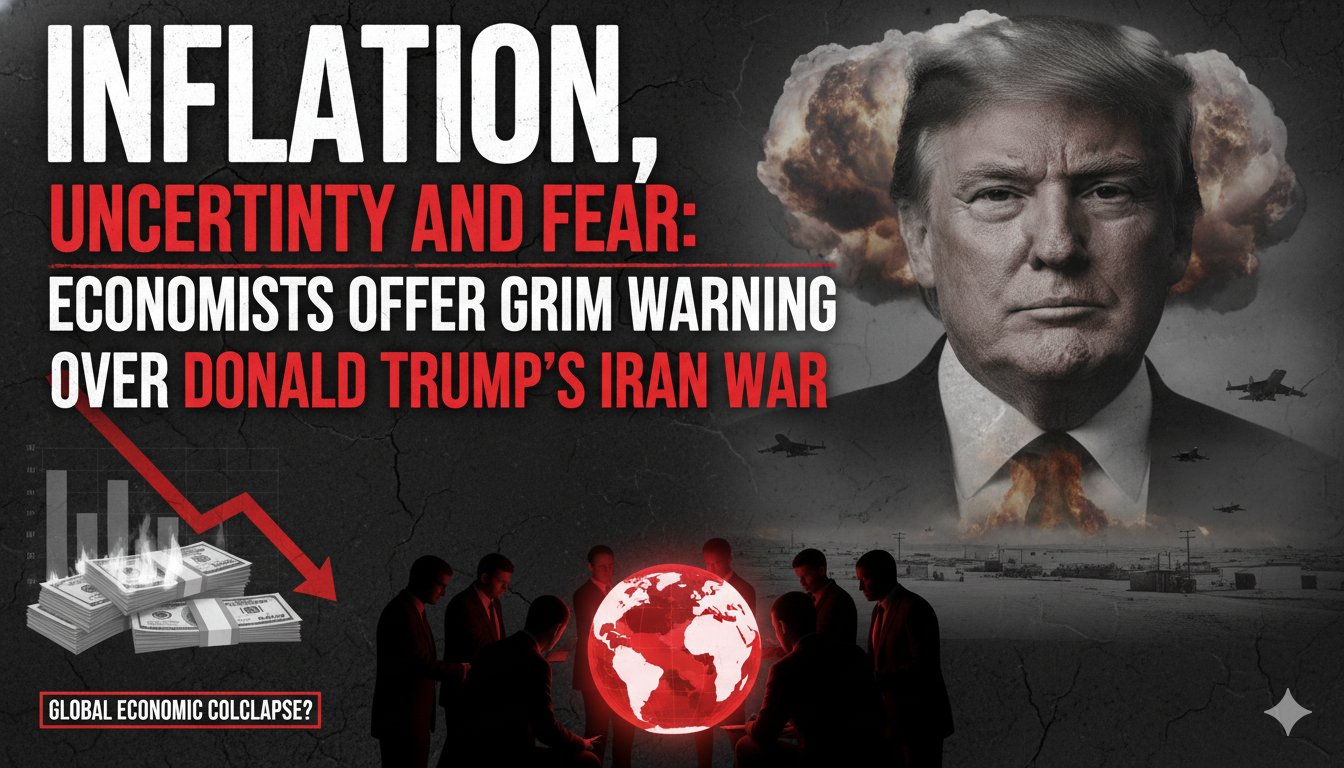
“Leading economists are sounding the alarm on the escalating U.S.-Iran conflict under President Donald Trump, predicting sharp oil price spikes that could drive inflation higher, erode consumer spending power, and tip the fragile global economy into recession if the war drags on, with disruptions in key energy routes amplifying uncertainty and market volatility.”
The ongoing military engagement between the United States and Iran, initiated under President Donald Trump’s directive, has thrust the global economy into a precarious position. As airstrikes and retaliatory measures intensify, financial experts are dissecting the ripple effects, from surging energy costs to broader macroeconomic instability. The conflict, rooted in longstanding tensions over nuclear ambitions and regional influence, now threatens to unravel recent gains in stabilizing prices and growth.
Oil Market Turmoil and Supply Chain Disruptions
At the heart of the economic concerns lies the vulnerability of global oil supplies. Brent crude, a benchmark for international oil prices, has already climbed to around $83 per barrel, marking a 2.2% daily increase and a staggering 22% rise over the past month. Similarly, West Texas Intermediate (WTI) crude hovers near $77 per barrel, up nearly 3% in recent trading sessions. These jumps stem directly from fears surrounding the Strait of Hormuz, a narrow waterway along Iran’s southern coast that channels about 20% of the world’s oil and a significant portion of liquefied natural gas.
If the strait faces prolonged disruptions—whether through naval blockades, insurance pullouts, or heightened risks to shipping—analysts project oil prices could breach $100 per barrel within weeks. In a worst-case scenario, where Gulf producers are forced to curtail output due to exhausted storage capacity, prices might soar to $120 or even $200 per barrel. Such escalations would not only hit energy exporters but also importers like China, India, Japan, and the European Union, potentially leading to a cascade of supply shortages.
The U.S., now a net exporter of petroleum products, is somewhat insulated from direct supply cuts but remains exposed to global price volatility. Domestic gasoline prices have already risen to an average of $3.20 per gallon, with projections of a 10 to 30 cent increase in the near term. This could cascade into higher costs for transportation, manufacturing, and agriculture, where fuel is a critical input.
Inflation Pressures Mounting
The U.S. inflation rate, which eased to 2.4% in January from 2.7% the previous month, now faces upward momentum. Core inflation, excluding volatile food and energy, stands at 2.5%, its lowest since early 2021. However, economists caution that sustained oil shocks could add 0.35 to 0.7 percentage points to headline inflation within months. For every 10% rise in oil prices, consumer price indexes could climb by about 0.2 percentage points, with effects lingering longer if the conflict persists.
Shelter costs, already a heavyweight in the consumer price index at 3% year-over-year, could see indirect pressures from higher energy bills. Food prices, up 3.1%, might accelerate as transportation and fertilizer costs—tied to natural gas—rise. Used vehicles and household goods could follow suit, with recreation and personal care items potentially inflating by 2.5% to 5.4%.
In the Eurozone, similar dynamics are at play: A 15% energy price hike could boost harmonized inflation by 0.4 to 0.5 points while shaving 0.2 points off GDP growth. Globally, if oil hits $100 for an extended period, inflation could surge by 0.6 points, exacerbating existing strains from tariffs and weak hiring.
Uncertainty and Market Volatility
| Scenario | Oil Price Projection | Inflation Impact (U.S. Headline) | GDP Growth Impact (Global) |
|---|---|---|---|
| Severe Disruption (Strait Closure >6 Months) | $120-$200 per barrel | +1.0-2.0 points | -1.5% to -3.0%, Recession Risk High |
Financial markets have reacted with sharp swings. U.S. equities, already overvalued amid fiscal concerns, face the risk of a correction if energy shocks compound. Bond yields could rise as investors demand higher premiums for inflation risks, complicating the Federal Reserve’s path to rate cuts. The PCE inflation measure, targeted at 2% by the Fed, sat at 2.9% in late 2025, and further spikes could delay monetary easing.
Business confidence is waning, with potential pullbacks in investment and hiring. If the war extends, companies reliant on global supply chains—particularly in tech, automotive, and consumer goods—could face delays and cost overruns. Aviation and tourism sectors are already reporting disruptions, with rerouted flights and canceled routes adding to operational expenses.
Key points of market concern include:
Stock Market Declines : Indices could drop 5-10% in the initial phase, with energy stocks gaining but broader sectors like consumer discretionary suffering.
Currency Fluctuations : The U.S. dollar might strengthen as a safe haven, but emerging markets could see capital outflows.
Debt Implications : With U.S. debt exceeding $38 trillion, war-related spending could accelerate fiscal deterioration, pushing interest rates higher.
Broader Global Economic Fallout
The conflict’s reach extends beyond energy. Shipping fees are climbing as vessels detour around high-risk zones, potentially inflating costs for imported goods. In Asia, major importers could see industrial slowdowns, while Europe grapples with natural gas shortages if liquefied supplies are rerouted.
Economists highlight the risk of stagflation—a toxic mix of stagnant growth and rising prices—echoing 1970s oil crises but with modern twists. The U.S. economy, growing modestly at around 2% annually, could decelerate to 1% or less if consumer spending falters under higher pump prices and uncertainty. Globally, prolonged disruptions might shave 1-2% off world GDP, with recession probabilities soaring above 50% in vulnerable regions.
In the U.S., households could feel the pinch through elevated utility bills, grocery costs (beef and veal up 15% year-over-year, though eggs down 34%), and transportation expenses. Small businesses, already navigating tariffs, might delay expansions, leading to softer job markets—unemployment currently at 4.3%.
Sector-Specific Vulnerabilities
Energy Sector : U.S. producers benefit from higher prices, but global volatility could deter long-term investments.
Manufacturing : Higher input costs threaten competitiveness, especially for energy-intensive industries like chemicals and steel.
Consumer Goods : Retailers face squeezed margins if they absorb costs or pass them to shoppers, risking demand drops.
Finance : Banks could see increased loan defaults in exposed sectors, while insurers grapple with skyrocketing premiums for Middle East routes.
As the situation evolves, the emphasis remains on the war’s duration. A swift resolution might limit damage to transient price blips, but escalation could entrench fear, turning uncertainty into a self-fulfilling economic drag.
Disclaimer: This news report incorporates insights and tips from various sources.