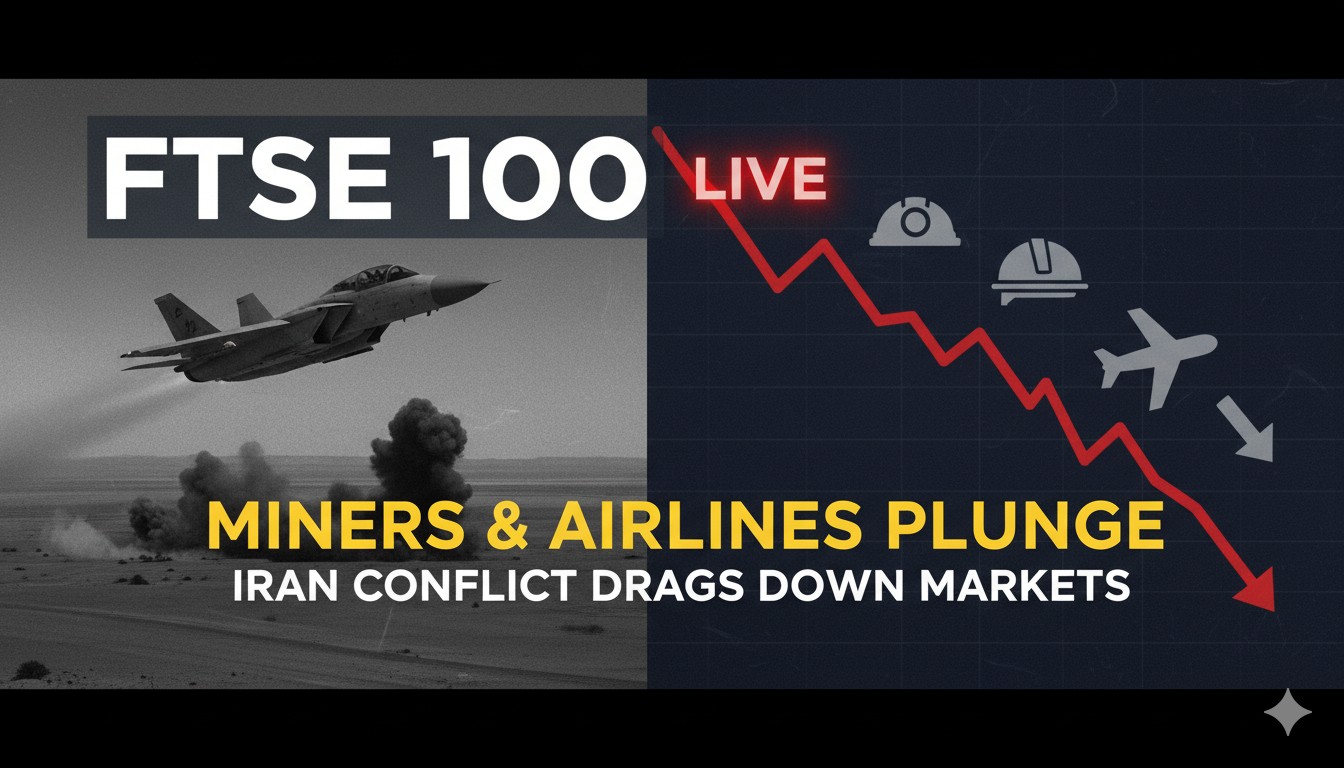
The FTSE 100 has faced renewed pressure amid the escalating conflict involving Iran, with mining stocks weighed down by volatile commodity prices and airlines suffering from disrupted routes, higher fuel costs, and reduced travel demand. The index trades lower in recent sessions, reflecting broader risk aversion despite gains in energy sectors from elevated oil prices, as geopolitical uncertainties persist and impact global market sentiment.
FTSE 100 Slips Further as Geopolitical Tensions Weigh on Key Sectors
London’s blue-chip benchmark continues to feel the strain from the ongoing war in the Middle East, where U.S. and Israeli military actions against Iran have entered a prolonged phase with no clear resolution in sight. The FTSE 100 has seen choppy trading, reversing some of the prior session’s modest rebound as investors digest the persistent risks from airspace closures, supply chain disruptions, and inflationary pressures stemming from surging energy costs.
Miners have been prominent among the decliners, as the conflict introduces uncertainty into global demand for industrial metals while precious metals see fluctuating appeal amid a stronger dollar. Major players like Rio Tinto have dropped sharply following disappointing earnings updates and broader sector weakness, with copper and iron ore prices under pressure from potential slowdowns in key consuming markets. Anglo American, Glencore, and Antofagasta have also posted notable losses, reflecting concerns over disrupted trade routes and reduced industrial activity if the war drags on. Endeavour Mining and Fresnillo have similarly retreated, as the initial safe-haven boost for gold and silver fades against currency headwinds and profit-taking.
Airlines remain among the hardest hit, with prolonged airspace restrictions across the region forcing widespread flight cancellations and rerouting. Over 23,000 flights have been affected globally since the conflict intensified, hammering passenger confidence and operational efficiency. International Consolidated Airlines Group (IAG), the parent of British Airways, has seen steep declines amid higher aviation fuel expenses and route disruptions. Budget carrier easyJet has followed suit, sliding as cost pressures mount and demand softens in a risk-off environment. The sector’s vulnerability to jet fuel price spikes—tied directly to crude oil volatility—has amplified the pain, with carriers facing immediate margin compression.
Despite these drags, not all sectors have suffered equally. Energy giants such as BP and Shell have benefited from the sharp rise in crude prices, which have remained elevated due to threats to key shipping lanes like the Strait of Hormuz and attacks on regional infrastructure. Natural gas futures have also surged dramatically, reaching multi-year highs after disruptions in LNG facilities and export routes. These gains have provided some offset to the index’s overall downside, though they have been insufficient to prevent the blue-chip gauge from extending losses.
Broader market dynamics show the FTSE 100 opening lower in recent sessions, with intraday ranges reflecting volatility—highs near 10,636 and lows dipping toward 10,506 in volatile trading. The index has hovered around levels like 10,500-10,550 in mid-session updates, down roughly 0.5-0.7% on the day in patterns seen across recent reports. This comes after a brief rebound of about 0.8% in a prior close, highlighting the seesaw nature of sentiment as developments in the conflict unfold.
Key fallers in the mining and airline spaces include:
Rio Tinto: Down over 3% in opening moves, pressured by earnings misses and metal price softness.
easyJet: Declines around 3-4%, exacerbated by a recent profit warning from peer Wizz Air and fuel cost concerns.
International Consolidated Airlines Group (IAG): Falling 2-3.5%, hit by operational disruptions and investor caution on travel recovery.
Anglo American and Glencore: Each off significantly, as copper demand faces headwinds from global uncertainty.
The conflict’s ripple effects extend beyond these sectors. Banks with exposure to emerging markets have felt secondary pressure from risk aversion, while luxury and consumer stocks have wavered on fears of broader economic slowdown. Defensive names and certain utilities have held up better, but the overall tone remains cautious.
Geopolitical risks continue to dominate headlines, with reports of ongoing strikes, retaliatory actions, and threats to critical energy infrastructure keeping volatility elevated. Oil prices have shown swings but remain well above pre-conflict levels, supporting energy shares while punishing fuel-dependent industries. Investors are closely monitoring any diplomatic signals or escalation risks that could either stabilize or further roil markets.
The FTSE 100’s performance underscores the index’s sensitivity to global energy dynamics and commodity cycles, particularly when amplified by geopolitical events. With the war showing no immediate signs of de-escalation, pressure on miners and airlines is likely to persist, capping upside potential for the broader index in the near term.
Disclaimer: This is a news and market analysis report based on current events and data. It is for informational purposes only and does not constitute investment advice, recommendations, or solicitation to buy or sell securities.