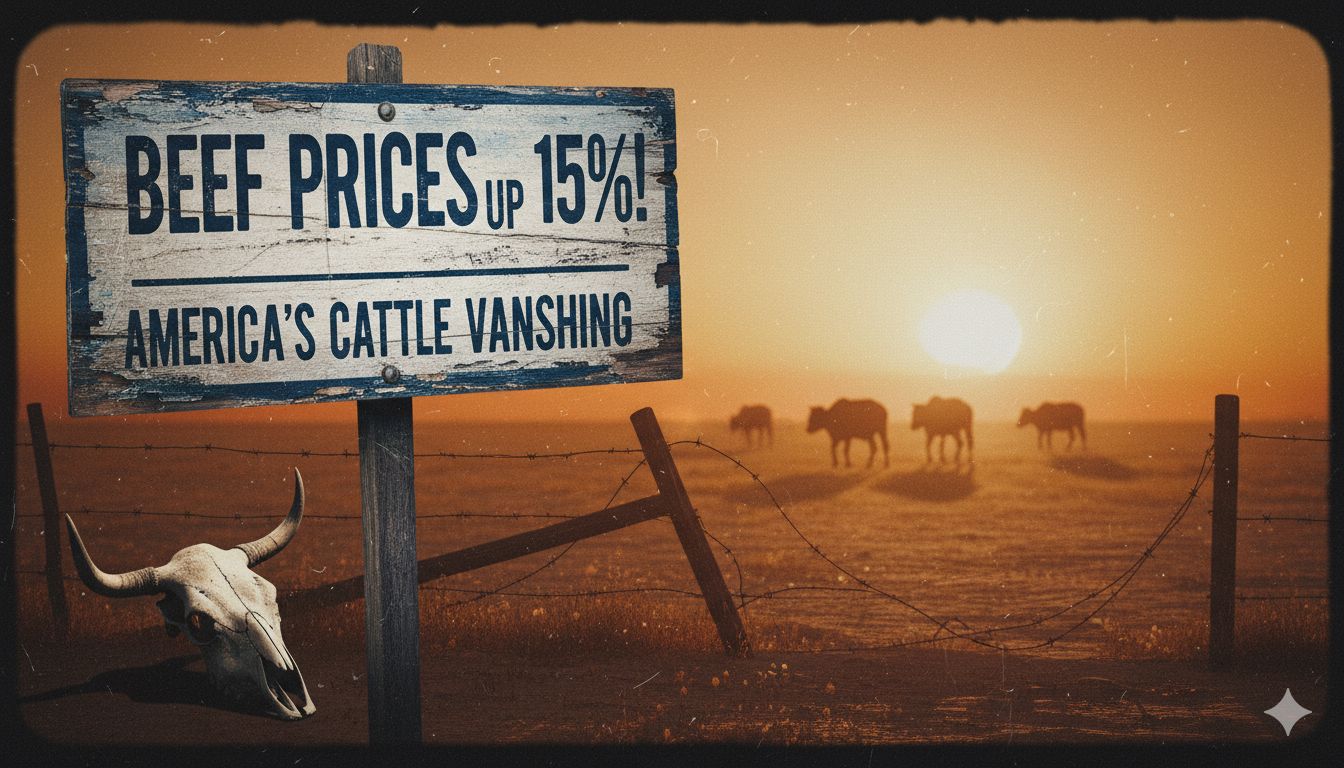
The U.S. cattle herd has shrunk to its lowest level in 75 years at 86.2 million head as of January 1, 2026, continuing an eight-year contraction driven by prolonged drought, high production costs, and rancher decisions to liquidate rather than expand. This tight supply has collided with resilient consumer demand, pushing retail beef prices up significantly—around 15% year-over-year in recent data—leading to record highs and market volatility that shows no quick relief in sight.
The ongoing contraction in the U.S. cattle sector has reached a critical point, with the total inventory of all cattle and calves standing at 86.2 million head on January 1, 2026. This marks a slight decline of about 0.3% from the previous year and represents the smallest herd size since 1951. The beef cow herd specifically fell 1% to 27.6 million head, the lowest since 1961, underscoring the depth of the liquidation phase in the current cattle cycle.
This prolonged downturn stems from multiple pressures that have discouraged herd rebuilding. Extended drought conditions across key cattle-producing regions have reduced pasture availability and increased feed costs dramatically. Ranchers faced elevated expenses for hay, grain, and other inputs amid broader inflationary trends in agriculture. Many operations, particularly smaller family-run ones with aging producers, opted to downsize herds rather than invest in expansion during unprofitable periods.
The 2025 calf crop reflected these challenges, estimated at 32.9 million head—a 2% drop from the prior year and a record low for recent decades. Fewer calves translate directly to reduced feeder cattle supplies entering feedlots, tightening the pipeline for fed cattle ready for slaughter. Cattle on feed as of early 2026 totaled 13.8 million head, down 3% year-over-year, further constraining near-term beef output.
Despite these supply constraints, beef demand has held remarkably strong. Consumers continue to prioritize protein-rich foods, with beef maintaining its position as a staple even at higher price points. This resilience has amplified the impact of limited supplies, driving wholesale and retail values higher. The all-fresh retail beef price reached record levels in late 2025, with composite figures climbing steadily and contributing to the broader 15% increase in beef and veal costs over the past year.
Market dynamics have turned increasingly volatile as a result. With supplies so tight, even minor news events—ranging from weather shifts to policy changes—can trigger sharp price swings in live cattle futures and wholesale cutouts. Fed steer prices have benefited producers in the short term, averaging in elevated ranges that reward those still in the business, but the overall sector remains cautious about rapid expansion.
Replacement heifer numbers provide a glimmer of potential change, with beef replacement heifers up 1% to 4.71 million head and those expected to calve also showing a modest increase. This suggests some ranchers are beginning to retain more females for breeding rather than sending them to feedlots. However, meaningful herd growth is unlikely before 2028, as the biology of cattle production requires time: heifers retained today won’t produce significant additional calves until later years, and widespread rebuilding faces hurdles like ongoing input costs and producer demographics.
Beef production forecasts reflect this reality, with expectations for further contraction in output in 2026 before any stabilization or modest recovery. Per-capita supplies may edge slightly higher due to factors like imports and carcass weights, but domestic lean beef remains limited, supporting elevated prices.
The combination of these factors has created a market environment where beef stands out in the grocery basket. While overall food inflation has been moderate, beef has outpaced it substantially, affecting household budgets and prompting discussions about long-term affordability.
Key Cattle Inventory Data (January 1, 2026 vs. 2025)
Total cattle and calves: 86.2 million head (down 0.3%)
Beef cows: 27.6 million head (down 1%)
All cows and heifers that have calved: 37.2 million head (slightly down)
Cattle on feed: 13.8 million head (down 3%)
2025 calf crop: 32.9 million head (down 2%)
These numbers highlight the structural tightness that will likely keep pressure on beef prices through the coming year and beyond, as the industry navigates the later stages of contraction toward a potential slow turnaround.
Disclaimer: This is for informational purposes only and does not constitute financial, investment, or purchasing advice.