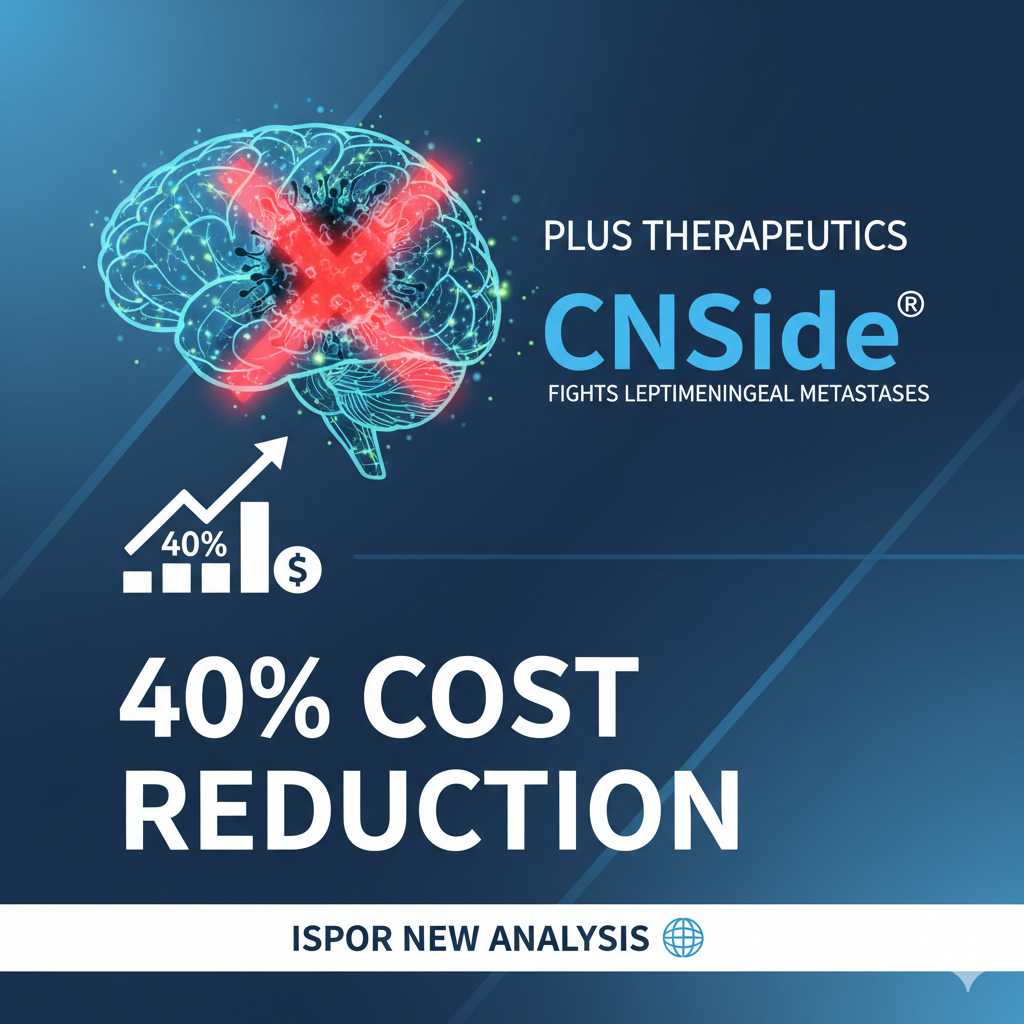
“A new health economics analysis from Plus Therapeutics reveals that the CNSide® cerebrospinal fluid assay could slash overall healthcare costs related to leptomeningeal metastases by approximately 40% (ranging from 33% to 47%) through earlier detection, more precise treatment decisions, fewer hospitalizations, and better patient management. The study underscores the heavy economic burden of late-stage LM diagnoses, where monthly costs can surpass $100,000 and inpatient admissions average around $20,000, highlighting CNSide’s potential value as the company pushes forward with U.S. commercialization.”
Economic Impact of CNSide in Managing Leptomeningeal Metastases
Leptomeningeal metastases (LM), a devastating complication where cancer spreads to the membranes surrounding the brain and spinal cord, represent one of the most challenging and costly aspects of advanced oncology care. Typically arising from primary cancers such as breast, lung, or melanoma, LM affects a significant subset of patients with metastatic disease and carries a poor prognosis, often leading to rapid neurological decline.
Traditional diagnostic approaches for LM rely heavily on clinical symptoms, magnetic resonance imaging (MRI), and cerebrospinal fluid (CSF) cytology. However, these methods frequently result in delayed or inconclusive diagnoses. CSF cytology, the current gold standard, suffers from low sensitivity, missing many cases until the disease has progressed substantially. This late detection drives up healthcare utilization through repeated imaging, emergency interventions, prolonged hospital stays, and intensive palliative measures.
Plus Therapeutics has developed CNSide®, a proprietary CSF-based assay platform designed to detect, quantify, and characterize tumor cells and circulating tumor DNA in the CSF with greater accuracy and speed. By enabling earlier and more definitive identification of LM, along with real-time monitoring of treatment response and molecular profiling, CNSide offers clinicians actionable insights that can guide personalized therapies sooner in the disease course.
A recent cost-of-care analysis, set to be presented at the ISPOR 2026 Annual Meeting in Philadelphia (May 17-20), evaluates the potential economic implications of integrating CNSide into LM management. The study, co-authored by experts from CNSide Diagnostics and the Harvard T.H. Chan School of Public Health, models the financial impact of shifting from late-stage to earlier diagnosis and optimized therapeutic management.
Key findings from the analysis indicate substantial potential savings:
Overall LM-related healthcare cost reduction : Approximately 40% (with a modeled range of 33% to 47%).
Primary drivers of savings : Earlier therapeutic intervention, enhanced treatment precision, reduced adverse events, fewer hospitalizations, and gains in quality-adjusted life years (QALYs).
Cost benchmarks for late-stage LM :
Median inpatient admission costs: ~$20,000 (interquartile range $10,000–$30,000).
Total monthly LM-related expenses: Often exceeding $100,000, fueled by repeated neuroimaging, LM-directed therapies, supportive care, and palliative interventions.
Imaging considerations : While more frequent monitoring might maintain or slightly increase imaging-related expenses, these are offset by downstream reductions in acute care needs.
The analysis incorporates advanced cost-effectiveness modeling to account for variables such as claims bundling—where LM treatments are frequently combined with costs from the underlying primary cancer—and the high variability in patient trajectories. By facilitating proactive management, CNSide could help avoid the cascade of resource-intensive events that characterize advanced LM, including repeated lumbar punctures, ventriculoperitoneal shunts for symptom control, intrathecal chemotherapy administrations, and extended inpatient palliative stays.
This economic perspective arrives at a pivotal time for Plus Therapeutics, as the company advances the U.S. commercialization of CNSide. The assay platform has already demonstrated clinical utility in prior studies, showing superior sensitivity for tumor cell detection and the ability to track molecular changes over time, including targetable mutations. These features position CNSide not just as a diagnostic tool but as a comprehensive management aid in neuro-oncology.
From a broader payer and healthcare system viewpoint, the potential 40% reduction in LM-associated costs could translate into meaningful relief for insurers, hospitals, and patients facing high out-of-pocket burdens in advanced cancer care. Earlier intervention may also extend progression-free survival and improve quality of life, further amplifying value-based outcomes.
The ISPOR presentation underscores the growing recognition of health economics in precision diagnostics for rare and complex conditions like LM. As stakeholders—including payers, providers, and policymakers—convene at the conference, data like this will inform discussions on coverage, reimbursement, and integration into clinical guidelines.
Key Cost Comparison Table: Late-Stage vs. Earlier Detection with CNSide
| Cost Component | Late-Stage LM (Traditional Approach) | Earlier Detection with CNSide (Estimated) | Potential Impact |
|---|---|---|---|
| Monthly Total LM-Related Costs | >$100,000 | Reduced by ~40% | Significant savings |
| Median Inpatient Admission | ~$20,000 (IQR $10K–$30K) | Lower frequency and duration | Reduced acute care utilization |
| Hospitalizations & Adverse Events | High | Decreased | Fewer readmissions |
| Imaging & Monitoring | High (reactive) | Potentially stable/increased | Offset by other reductions |
| Overall Cost Reduction Range | Baseline | 33%–47% | Driven by precision & early action |
In the evolving landscape of CNS oncology, tools that combine diagnostic precision with economic rationale hold particular promise. The upcoming ISPOR data on CNSide highlights how innovative assays can address both clinical unmet needs and the escalating financial pressures of managing metastatic CNS disease.
Disclaimer: This article is for informational purposes only and does not constitute medical, investment, or financial advice. All information is based on publicly available data and analyses as of the latest reports.