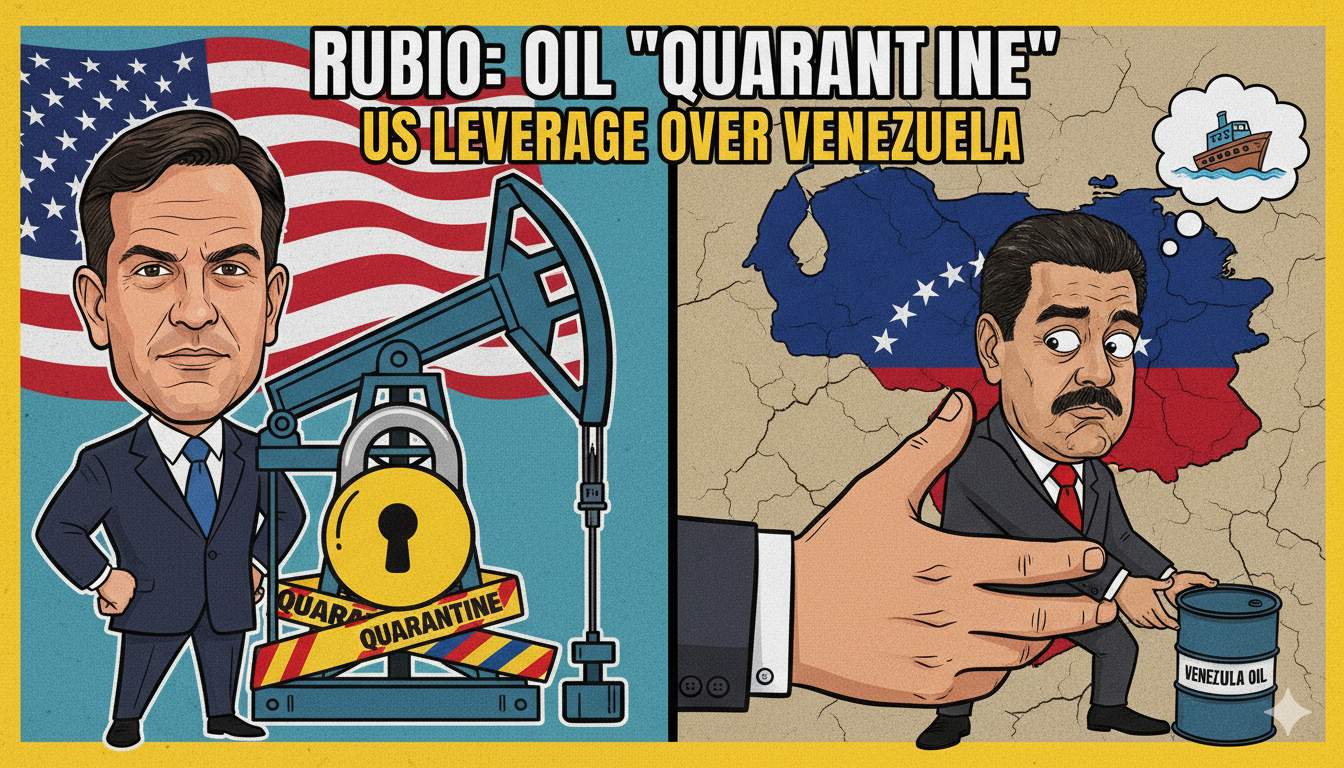
Secretary of State Marco Rubio emphasized that the ongoing U.S.-enforced oil quarantine around Venezuela provides significant leverage to push for reforms in the country’s leadership and energy sector following the capture of Nicolás Maduro. The measure, backed by naval presence and sanctions enforcement, aims to restrict revenue from sanctioned oil shipments while encouraging openness to American investment and curbs on illicit activities. With Venezuela’s vast reserves in focus, Rubio indicated the quarantine will persist until tangible changes align with U.S. interests and benefit the Venezuelan people. (62 words)
Rubio’s Remarks Signal Firm Stance on Venezuelan Oil Policy
Secretary of State Marco Rubio underscored the strategic importance of the U.S. military’s oil “quarantine” around Venezuela, describing it as a powerful tool to influence the country’s post-Maduro trajectory. In recent interviews, Rubio explained that the quarantine involves preventing sanctioned oil tankers from entering or leaving Venezuelan ports, effectively limiting the flow of revenue that has long sustained the previous regime.
This enforcement mechanism, supported by U.S. naval assets in the Caribbean and Coast Guard operations, allows authorities to seize vessels under court orders. Rubio noted that the policy remains fully in effect, paralyzing much of Venezuela’s oil export activity and creating economic pressure on interim leaders.
Key U.S. Demands and Potential Pathways Forward
Rubio outlined priorities for Venezuela’s new leadership, including opening the oil industry to greater foreign—particularly American—investment, cracking down on drug trafficking networks, and severing ties with malign foreign influences. He stressed that the U.S. will evaluate progress based on actions, not promises, and retain multiple levers, with the oil quarantine chief among them.
While declining to endorse specific figures in the opposition or interim government, Rubio indicated flexibility if leaders demonstrate commitment to reforms that serve both U.S. national security interests and the welfare of Venezuelans.
Impact on Global Oil Markets and U.S. Energy Interests
Venezuela holds the world’s largest proven oil reserves, estimated at over 300 billion barrels, yet current production hovers around 1 million barrels per day due to years of underinvestment and sanctions. Exports have been severely curtailed by the quarantine, with recent loadings halted and vessels awaiting clearance.
| Metric | Current Estimate (Early 2026) | Historical Peak |
|---|---|---|
| Proven Reserves | 303 billion barrels | N/A |
| Daily Production | ~1 million bpd | 3.2 million bpd (early 2000s) |
| Recent Exports | Paralyzed (~0 effective) | ~900,000 bpd (late 2025) |
| Main Buyers (Pre-Quarantine) | China, limited U.S. via Chevron | Diverse global |
American companies, including Chevron—which had been exporting limited volumes under restricted licenses—stand positioned for expanded roles if conditions improve. Rubio and administration officials have signaled intent to attract billions in U.S. investment to rehabilitate decaying infrastructure, potentially boosting output and integrating Venezuelan heavy crude into Gulf Coast refineries.
Global benchmarks reflect ongoing oversupply pressures, with Brent crude trading around $61 per barrel and WTI near $57, down significantly from prior years amid ample non-Venezuelan production.
Broader Implications for Regional Stability
The quarantine’s continuation aims to deter cooperation with drug cartels and foreign adversaries while incentivizing structural changes. Rubio reiterated that U.S. actions target threats like narco-trafficking, not the Venezuelan people, and could evolve based on compliance.
As naval forces maintain position, the policy underscores a calibrated approach blending enforcement with opportunities for economic revival through private sector involvement.
Disclaimer: This article is for informational purposes only and does not constitute financial advice, investment recommendations, or endorsements of any policies.