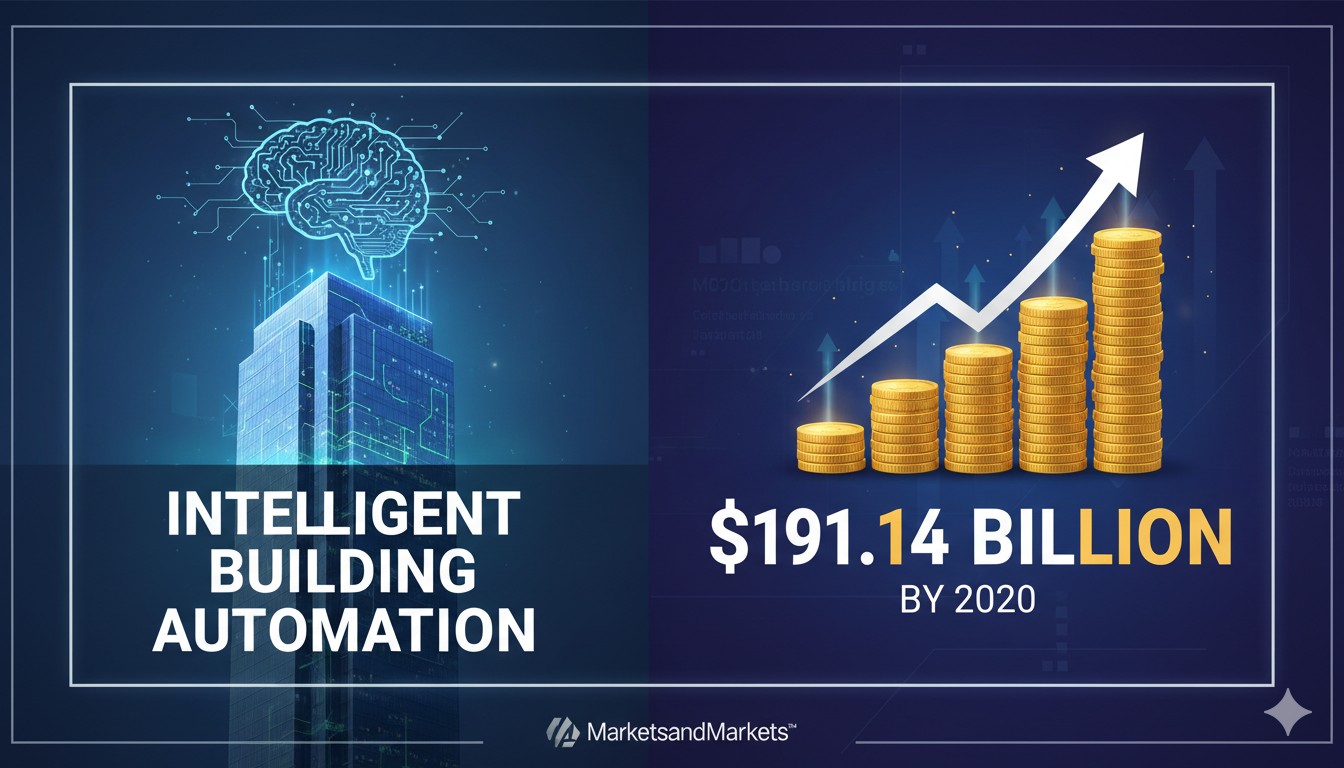
The intelligent building automation technologies market is poised for robust expansion, projected to grow from $122.49 billion in 2026 to $191.14 billion by 2030, reflecting a compound annual growth rate (CAGR) of 11.8%. This surge is fueled by escalating demand for energy-efficient solutions, widespread integration of IoT and AI, rapid urbanization in emerging regions, and stringent sustainability regulations driving adoption across commercial, residential, and industrial sectors. Asia Pacific emerges as the fastest-growing region, while commercial applications dominate market share.
Market Growth Accelerates Amid Energy Efficiency and Smart Infrastructure Demands
The intelligent building automation technologies sector encompasses advanced systems that integrate facility management, security and access control, building energy management, and more through technologies such as sensors, actuators, connectivity solutions, and powerful computing platforms. These systems enable real-time monitoring, predictive maintenance, and optimized control of building operations, transforming traditional structures into responsive, efficient environments.
A primary driver behind the projected growth to $191.14 billion by 2030 is the intensifying focus on reducing energy consumption in buildings, which account for a substantial portion of global energy use and carbon emissions. Intelligent automation allows for dynamic adjustment of heating, ventilation, and air conditioning (HVAC), lighting, and other systems based on occupancy patterns, weather data, and real-time analytics. This results in significant cost savings for operators and aligns with corporate sustainability goals and government mandates for greener infrastructure.
The commercial segment stands out as the largest end-use category, expected to represent approximately 46.2% of the market in 2026. Office complexes, retail spaces, hotels, and institutional facilities increasingly deploy these technologies to enhance occupant comfort, improve security, and lower operational expenses. For instance, integrated platforms now enable seamless control of access points, surveillance, and environmental conditions, reducing manual interventions and enhancing overall building performance.
Technological advancements play a pivotal role in this expansion. The proliferation of Internet of Things (IoT) devices has created vast networks of connected sensors that feed data into centralized systems for actionable insights. Artificial intelligence and machine learning algorithms analyze this data to predict equipment failures, optimize energy usage, and personalize indoor environments. Cloud-based deployments further facilitate remote management and scalability, making these solutions accessible to a broader range of building owners, including those managing portfolios across multiple locations.
Connectivity remains a cornerstone, with protocols enabling interoperability among diverse devices and systems. Edge computing complements this by processing data closer to the source, minimizing latency for critical functions like emergency responses or security alerts. Actuators and controllers execute commands swiftly, ensuring precise regulation of building elements from lighting dimming to automated shading.
Regional dynamics highlight uneven but accelerating adoption. Asia Pacific is positioned for the highest growth trajectory, with a CAGR of around 15.2% during the forecast period. Rapid urbanization, massive infrastructure projects in countries like China and India, and government-led smart city programs are propelling investments. New commercial developments incorporate intelligent automation from the ground up, while retrofits in existing structures gain momentum to meet rising energy standards.
North America and Europe maintain strong positions due to mature markets and rigorous regulatory frameworks promoting energy efficiency and occupant safety. Incentives for sustainable construction, coupled with corporate commitments to net-zero targets, continue to drive upgrades in older building stock. In these regions, emphasis on cybersecurity for connected systems has also intensified, as vulnerabilities in IoT networks pose risks that vendors address through advanced encryption and secure protocols.
Key market segments break down as follows:
By Solution : Facility management leads in scope, encompassing integrated control of multiple subsystems. Security and access control follow closely, driven by heightened concerns over physical threats and data privacy. Building energy management software gains traction for its direct impact on utility costs.
By Technology : Sensors dominate due to their foundational role in data collection, followed by connectivity solutions that enable seamless integration. Computing advancements, including AI-enabled platforms, are accelerating fastest as they unlock predictive capabilities.
By End Use : Beyond commercial dominance, residential adoption rises with smart home ecosystems, while industrial applications focus on process optimization and worker safety.
Challenges persist, including high upfront costs for comprehensive deployments and the need for skilled personnel to implement and maintain complex systems. Interoperability issues among legacy and new equipment can complicate retrofits. However, falling costs of sensors and computing power, along with subscription-based service models, are lowering barriers to entry and enabling phased implementations.
The competitive landscape features established players investing heavily in R&D to incorporate AI, edge processing, and sustainable features. Partnerships between technology providers and building owners are common, facilitating customized solutions that deliver measurable returns through energy savings and enhanced asset longevity.
Overall, the trajectory toward $191.14 billion by 2030 underscores a fundamental shift in how buildings are designed, operated, and managed. Intelligent automation is no longer a luxury but a strategic imperative for efficiency, resilience, and environmental responsibility in an increasingly urbanized world.
Disclaimer : This is a news and market analysis report based on industry projections and trends.